We believe that consumers of all ages have a social responsibility to increase awareness of recycling.
This promotes understanding of materials and their recyclability, as well as behavioral changes in separating and disposal.
Ultimately, it creates a stream of high-quality recyclable PET for transformation into new bottles and more, right here in California.
 Contact Michelle Clark for more information.

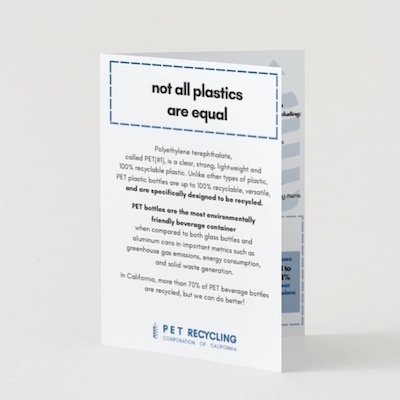
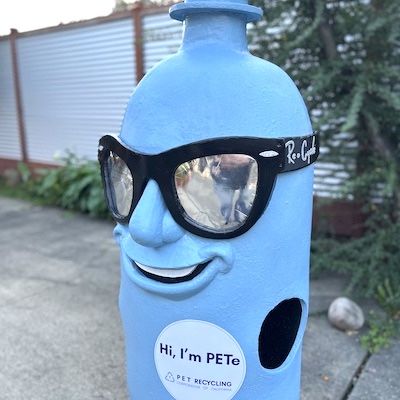
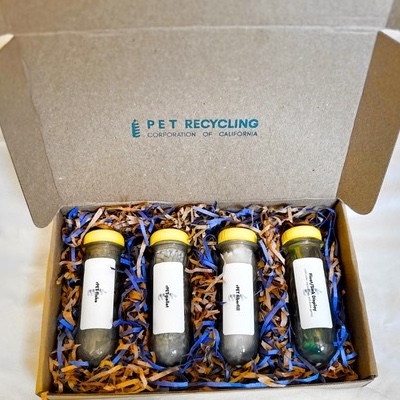
PRCC Education Kit
Each kit includes:
- Recycled PET pellet
- Recycled PET flake
- Recycled PET fiber
- Preform filled with a “Float-Sink" Display
(PET mixed with cap & label material. When placed in water, PET material sinks. A preform is a bottle before being fully blown to its final shape. It looks a bit like a thick plastic test tube.) - Educational Sheet explaining the recycling process
Education Kit Order Form
PRCC Favorite Education Links
|
NAPCOR partnered with Franklin Associates to examine the environmental impacts of beverage bottles and cans in the United States. The result is a Life Cycle Assessment report that provides fact-based, science-driven evidence that concludes, when compared to glass and aluminum, PET plastic delivers significant environmental savings across several key environmental categories.
01/19/26 NAPCOR |
|
PET (polyethylene terephthalate) differs from other plastics. PET plastic bottles and containers are safe, lightweight, resealable, shatter-resistant, less harmful to the environment than aluminum or glass, and fully recyclable. The world’s most recycle
01/19/26 NAPCPOR |
|
rPET is recycled PET (polyethylene terephthalate) plastic that is used to make packaging, such as plastic bottles and food containers. After the original PET containers are used by consumers, they are returned via a recycling program to a facility that so
01/19/26 International Bottled Water Association |